
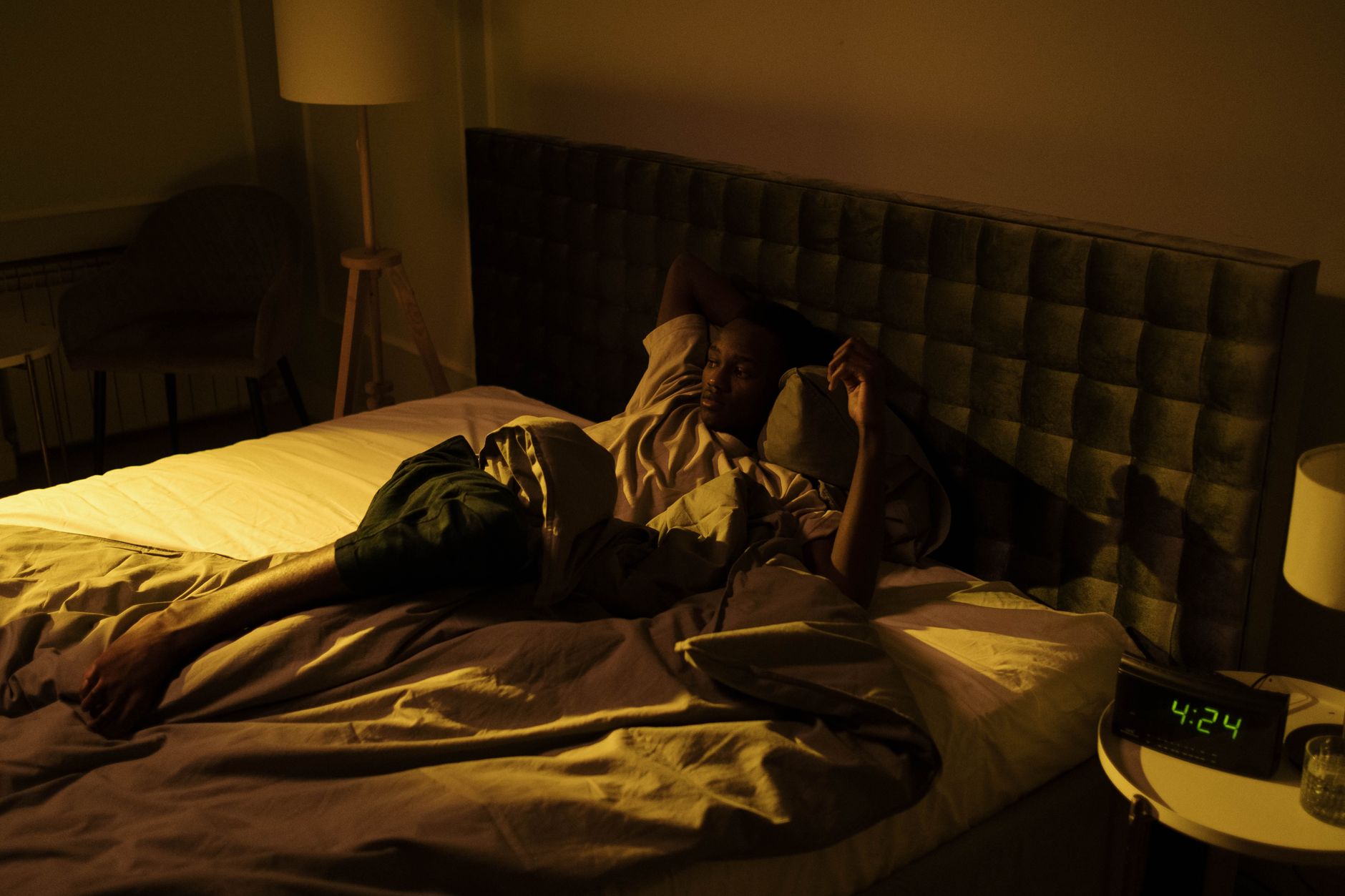
Circadian rhythm sleep disorders are a distinct category of sleep conditions in which the timing of sleep is the core problem, not just the quality or quantity of it. Where someone with ordinary insomnia can't fall asleep or stay asleep, a person with a circadian rhythm disorder is sleeping at the wrong time relative to what their daily life demands. The underlying mechanism is the body's internal clock, and when that clock drifts, shifts, or fails to respond to daylight cues, the consequences reach well beyond fatigue.
What the internal clock actually does
Your body runs on a roughly 24-hour cycle governed by a small cluster of neurons in the hypothalamus called the suprachiasmatic nucleus. This structure responds primarily to light. When light hits the retina in the morning, the suprachiasmatic nucleus suppresses melatonin production and raises core body temperature, signalling that it's time to be awake. As darkness falls, that process reverses. The system influences cortisol release, digestion, immune activity, and dozens of other physiological processes, not just sleep.
When the internal clock falls out of sync with the external world, the friction shows up fast. People feel exhausted at the wrong hours and alert when they should be sleeping. They perform poorly at work, make more errors, and face a measurably elevated risk of metabolic and cardiovascular problems over time. It isn't laziness or poor discipline. It's biology.
The main types of circadian rhythm sleep disorder
The most common presentation in Australia is delayed sleep phase disorder (DSPD). People with DSPD have an internal clock that runs late: they can't fall asleep until 2 am or 4 am naturally, and if left to their own schedule, they sleep soundly until late morning. Forced to wake at 7 am for work or school, they're chronically sleep-deprived. DSPD is far more prevalent in teenagers and young adults than the general population, driven partly by puberty-related hormonal shifts.
At the opposite end sits advanced sleep phase disorder (ASPD), where the clock runs early. People become irresistibly sleepy at 6 pm or 7 pm and wake spontaneously at 3 am or 4 am. ASPD is more common in older adults. Both DSPD and ASPD are stable conditions with a strong genetic component. They're not things people grow out of simply by "going to bed earlier."
Two further types are worth knowing:
- Non-24-hour sleep-wake disorder: The internal clock cycles slightly longer than 24 hours and never anchors to daylight cues. Sleep and wake times drift progressively later each day. This condition is most common in people who are blind, because the retina can't transmit light signals to the brain.
- Irregular sleep-wake rhythm disorder: Sleep is fragmented into multiple short bouts across 24 hours, with no clear consolidated night period. Associated with neurological conditions including Alzheimer's disease and Parkinson's disease.
Shift work disorder is also classified here. Nurses, emergency workers, and long-haul truck drivers who rotate between day and night shifts force their bodies to override the internal clock repeatedly, producing a chronic mismatch between the clock and the required schedule.
How circadian rhythm disorders are diagnosed
A GP or sleep specialist will typically start with a sleep diary kept for two weeks or more, recording when you go to bed, when you fall asleep, when you wake, and how rested you feel. Many sleep clinics also use actigraphy, a wrist-worn device that measures movement and light exposure across days or weeks, producing an objective picture of your sleep-wake pattern. Polysomnography (the overnight sleep study) is rarely necessary for circadian disorders unless another condition such as sleep apnoea is suspected alongside.
Diagnosis matters because the treatment differs substantially between disorder types. Getting it wrong wastes time and, in some cases, makes things worse.
How circadian rhythm sleep disorders are managed
Light therapy is the first-line treatment for both DSPD and ASPD, because light is the strongest signal available to reset the suprachiasmatic nucleus. For DSPD, a 10,000-lux light box used for 30 minutes immediately upon waking can gradually pull the clock earlier, often by 30 to 60 minutes per week of consistent use. For ASPD, timed evening light exposure (from around 7 pm to 9 pm) delays the clock's natural advance.
Melatonin is used as a chronobiotic (a timing agent) rather than a sedative in this context. Low doses taken at strategically calculated times help shift the phase of the internal clock. The timing matters more than the dose: 0.5 mg taken 5 hours before the natural sleep onset produces a larger phase-advance than 5 mg taken at bedtime. Many people use melatonin incorrectly, which is one reason it seems less effective than clinicians report in trials.
Chronotherapy, which involves progressively delaying bedtime by 2 to 3 hours each day until the desired sleep time is reached, was an early treatment for DSPD. It works in theory but is impractical for most working adults and can easily relapse. Most sleep clinics now prefer light therapy and melatonin.
For shift workers, strategic napping before night shifts and careful management of light exposure on the commute home (wearing blue-light-blocking glasses, for example) can reduce the severity of shift work disorder without eliminating it entirely. There's no clean fix for a job that demands you override your biology on a rotating schedule.
What doesn't help
Willpower. People with DSPD don't sleep late because they want to. Their clock is set differently, and telling them to "just go to bed earlier" is about as useful as telling a short-sighted person to "just look harder." Sleep hygiene advice (keeping a consistent schedule, avoiding screens before bed) helps people who are close to a normal circadian window maintain it, but it doesn't fundamentally reset a clock that's running two or four hours off.
Alcohol is also counterproductive. It can help with initial sleep onset but disrupts the second half of the sleep cycle and suppresses rapid eye movement sleep. For someone already fighting a misaligned clock, the resulting fragmentation compounds the problem.
If you suspect a circadian rhythm disorder is behind persistent sleep difficulties, a referral to a sleep physician is the right next step. In Australia, sleep clinics operate in every major city and many regional centres, and the assessment process, while not quick, produces a diagnosis that shapes genuinely targeted treatment.