
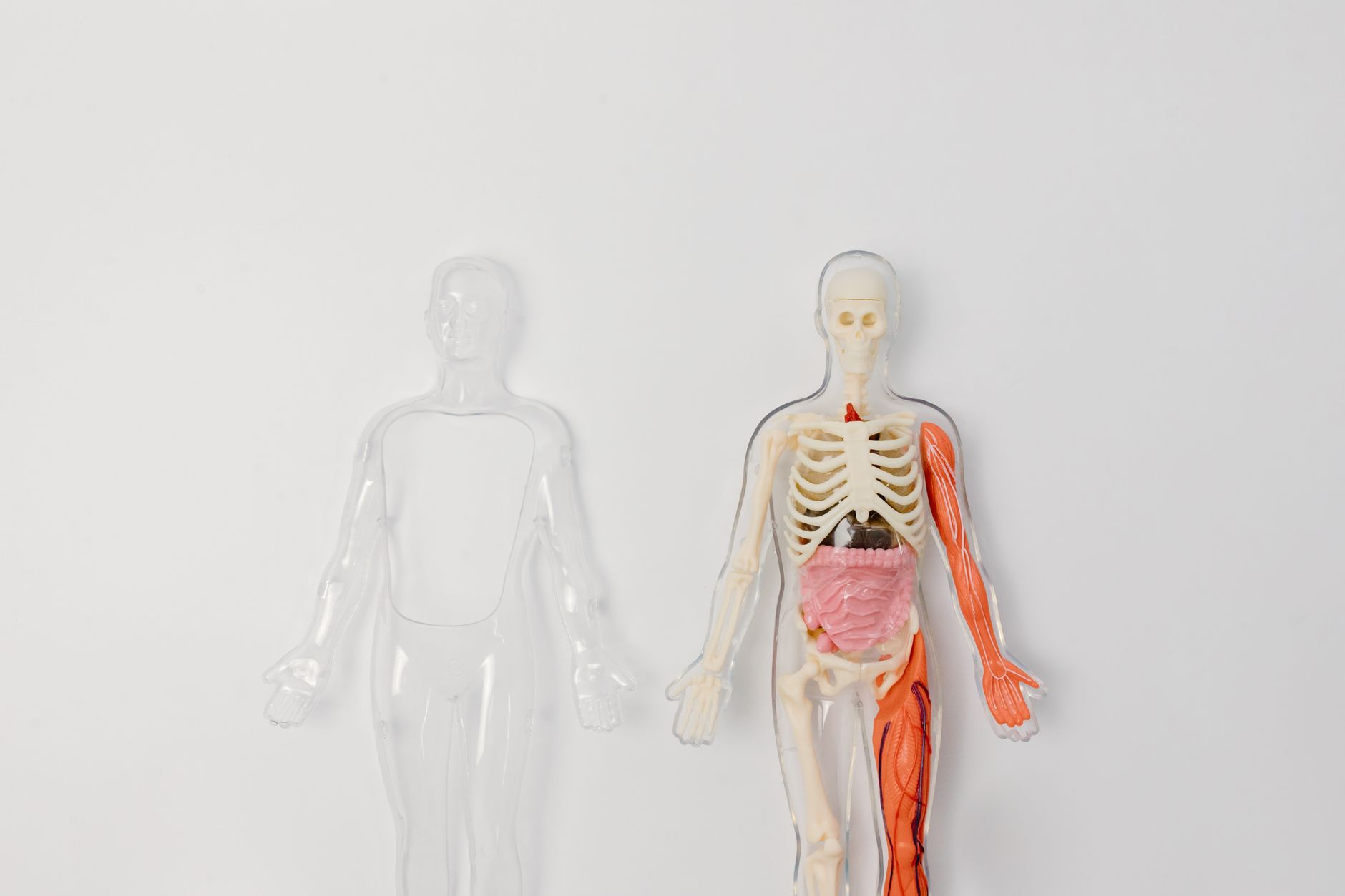
The appendix sits at the junction of your small and large intestines, tucked into the lower-right corner of your abdomen. It's a narrow, finger-shaped pouch, usually between 5 and 10 centimetres long, and for most of human history doctors assumed it had no purpose at all. That view has shifted considerably over the past two decades.
The old "vestigial organ" story
For much of the 20th century, the appendix was categorised as a vestigial structure: a remnant of evolution that once served a function in distant ancestors but had become redundant in modern humans. The reasoning was straightforward. Remove it, and nothing obvious happens. People live perfectly normal lives without one. So the conclusion seemed simple: it's useless.
That conclusion was premature. It was based mainly on what happens after removal, not on what the organ does while it's present.
What the appendix actually does
Research published over the past 20 years, particularly work from Duke University in the United States, has identified a credible function for the appendix. It appears to act as a reservoir for beneficial gut bacteria.
Your digestive system depends on a diverse population of microbes to break down food, regulate immunity, and maintain the gut lining. During a severe gastrointestinal illness, particularly one involving diarrhoea, that microbial population can be partially wiped out. The appendix seems to harbour a protected colony of these bacteria, sheltered from the turbulence happening elsewhere in the gut. Once the infection clears, the appendix may help repopulate the intestines.
This theory fits neatly with what we know about gut health more broadly. The gut microbiome is now understood to be central to immune function, inflammation regulation, and even mental wellbeing. An organ that helps preserve it during illness isn't trivial. It's a backup system.
The appendix also contains a significant amount of lymphoid tissue, which is tissue associated with the immune system. This places it squarely in the same functional category as other immune-adjacent structures, including the tonsils and the spleen. It may play a role in training immune cells early in life, particularly in childhood, before the broader immune system is fully developed.
What is appendicitis?
Appendicitis is what happens when the appendix becomes inflamed, usually because its narrow interior gets blocked. The blockage can be caused by hardened stool, mucus, or in some cases a parasitic infection. Once blocked, bacteria multiply rapidly inside the appendix. The organ swells, its walls weaken, and if nothing is done, it can rupture.
A ruptured appendix is a medical emergency. It releases infected material directly into the abdominal cavity, causing peritonitis, a dangerous and potentially fatal infection of the abdominal lining. This is why appendicitis is treated aggressively and quickly.
The classic symptoms are pain that starts around the navel and migrates to the lower-right abdomen, nausea, vomiting, low-grade fever, and loss of appetite. Not everyone presents that way. Children and older adults in particular can have atypical symptoms, which delays diagnosis.
Appendicitis affects roughly 1 in 1000 Australians each year, with peak incidence in teenagers and young adults. It's one of the most common reasons for emergency abdominal surgery in this country.
Surgical removal: appendectomy
The standard treatment for appendicitis is an appendectomy, the surgical removal of the appendix. It can be performed as an open procedure or laparoscopically, the latter involving small incisions and a camera. Most uncomplicated cases use the laparoscopic approach, with patients typically discharged within one to two days.
Antibiotic treatment alone has been trialled as an alternative for uncomplicated appendicitis, and results from several European studies suggest it works for a portion of patients. The recurrence rate is higher than with surgery, but for carefully selected cases it's a viable option. Australian hospitals are increasingly discussing this approach with patients.
Recovery from a laparoscopic appendectomy is generally fast. Most people return to light activity within a week and full activity within two to four weeks.
Life without an appendix
The vast majority of people who have their appendix removed notice no long-term effects. The gut microbiome does recover. Modern sanitation means severe gut-clearing illnesses are less common than they were for most of human history, so the backup reservoir function matters less in a developed country than it might have in the past.
Some research has suggested a weak statistical association between appendix removal and slightly altered immune response in later life, but the effect size is small and the evidence is not strong enough to change clinical practice. The risks of leaving an inflamed appendix in place always outweigh any theoretical benefit of keeping it.
What's worth understanding is that the appendix fits into a wider picture of how the body manages immunity and microbial balance. The lymphatic system, which filters pathogens and moves immune cells around the body, works alongside organs like the appendix to keep infections in check. Removing one component doesn't collapse the whole system, but it does illustrate how interconnected these structures are.
When to see a doctor
Abdominal pain that worsens over several hours and settles in the lower right should not be waited out. Appendicitis progresses quickly. The window between first symptoms and rupture can be as short as 24 hours in some cases, though it varies considerably.
If pain is severe, accompanied by fever, or comes with vomiting that won't stop, go to an emergency department. Don't eat or drink while waiting for assessment, as surgery may be required.
The appendix is small and easily overlooked. But it's a good example of why the label "useless" in biology deserves scepticism. The body rarely keeps something around for no reason at all.