
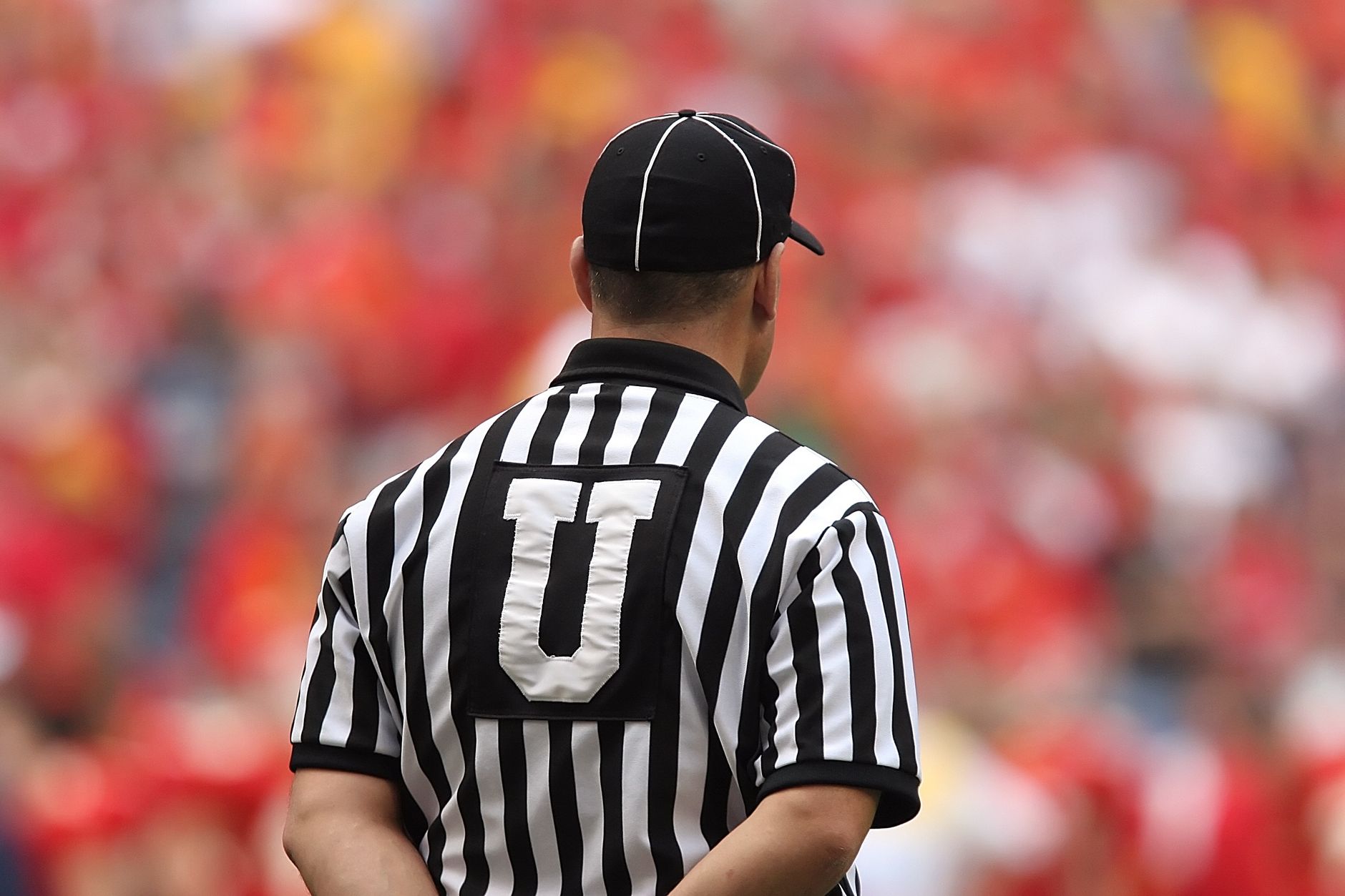
The AFL use-it-or-lose-it rule is one of the most consequential pieces of congestion-busting legislation the competition has introduced in recent years. It forces a player who has taken a mark or been awarded a free kick to either kick, handball, or run with the ball within a fixed time limit. Fail to do so, and the umpire calls play on, turning a set piece into a contested ball. The rule exists for one reason: to stop teams from using deliberate delays to pack defensive numbers behind the ball.
What exactly does the rule require?
When a player takes a mark or receives a free kick, they must dispose of the ball within six seconds of the umpire calling "play on" after the player has indicated they intend to kick for goal. Outside the goal-square, if a player accepts the mark, they have six seconds to begin their run-up or kick from the moment play is called by the umpire. The clock doesn't start from the moment the mark is taken. It starts from the moment the umpire is satisfied the player has had a reasonable opportunity to settle.
The practical trigger is straightforward. Take the mark. Indicate you're playing on or going back for a set shot. If the umpire judges you're stalling, the whistle blows. Play on is called. The opposition gets the ball in a contested situation, and all that positioning you were trying to build evaporates.
Why was the rule introduced?
AFL football spent much of the late 2010s wrestling with congestion. Teams packed as many as 18 players behind the ball, and the game became a grinding, low-scoring slog that alienated fans. The AFL Competition Committee identified one of the key enablers: players taking marks and then standing still for 10, 15, even 20 seconds while teammates jogged into set positions around them.
The use-it-or-lose-it rule was part of a broader package of changes designed to create more space. It's related to, but distinct from, other congestion rules. The AFL gainline rule tackles how players position themselves around the mark itself, while the 6-6-6 rule governs centre bounce setup. Use-it-or-lose-it specifically targets the stalling that happened after possession was secured.
How do umpires apply it in practice?
This is where the rule gets genuinely complicated. Umpires have discretion. They're not running a stopwatch on every single mark. The intent is to penalise deliberate time-wasting, not to punish a player who needs a moment to compose themselves before a 60-metre set shot on goal.
Three factors typically guide an umpire's call:
- Whether the player is visibly waiting for teammates to position rather than preparing to kick
- Whether the delay is unusually long by normal game standards
- Whether the opposition is being prevented from mounting a defensive structure by the stall itself
That discretion creates friction. Coaches and players complain that the rule is applied inconsistently, particularly in tight games where a "play on" call in the last quarter can swing the result. The AFL has acknowledged this and issued periodic guidance to field umpires, but inconsistency remains a live complaint.
What happens when play on is called?
Once the umpire calls play on under this rule, the mark or free kick is void. The ball is live. Any player can compete for it. The player who had the original possession can still kick or handball, but so can an opponent who rushes them. It's the same as if the player had fumbled after picking up a ground ball.
In practice, this rarely results in a turnover when the attacking player is alert. Most experienced AFL players, knowing the rule, simply kick as the umpire's call comes. The real impact is tactical: teams can no longer build an extra 10 to 15 seconds of defensive positioning into every set shot from outside 50.
How has the rule changed the game?
The AFL's own data, released in the years following the rule's strengthening, showed a measurable lift in average scoring and an increase in the number of uncontested marks taken inside 50. Defenders can no longer stand and stare while a forward rests on the mark and waits for backs to flood back.
Coaches adapted quickly. Set shot routines became tighter. Backmen were coached to retreat faster rather than waiting for a mark to be taken as a signal. Some clubs built new training drills specifically around post-mark transition speed, preparing both the marking player to kick quickly and teammates to read where the disposal would go rather than taking static positions.
The rule intersects interestingly with the AFL score review system. If a player rushes a set shot because they're worried about a use-it-or-lose-it call and misses the boundary between goal and behind, that review process kicks in. The pressure imposed by the rule can influence shot quality in ways that ripple into how video officials adjudicate close scores.
Common misconceptions
The biggest one: fans often believe the rule applies to any stoppage. It doesn't. It's specific to marks and free kicks. A player taking possession from a ball-up or a boundary throw-in has no time limit imposed by this rule. That possession immediately becomes a contested situation anyway.
Another misconception is that the rule was new to the AFL. It wasn't. A version of it existed for decades as the "play on" power, but umpires rarely used it. The modern iteration gave umpires clearer guidance and stronger encouragement to actually apply it, turning what was once a theoretical rule into a live game factor.
The rule also doesn't apply inside the goal-square on a mark. A player who takes a mark directly in front has time to place the ball and go through their set shot routine without risk of a play-on call. That's an intentional carve-out, recognising that rushing someone from point-blank range creates safety risks rather than tactical advantage.
What players and coaches have said
When the rule was strengthened, several senior coaches pushed back publicly. The concern wasn't the principle but the execution: a rule that rests on umpire discretion is a rule that can be applied differently at different venues, in different weather, and by different officiating teams. The AFL responded by publishing clearer guidelines and running specific umpire education sessions during the preseason.
Players adapted faster than the debate suggested they would. Within two seasons of the rule's reinvigoration, the number of "play on" calls under this specific provision had actually dropped. That's the tell: not because umpires stopped applying it, but because players stopped stalling. The rule changed behaviour without needing to be constantly invoked.
That's the real measure of a well-designed rule in professional sport. It doesn't need to be called on every play. It just needs to be real enough that everyone respects it.