
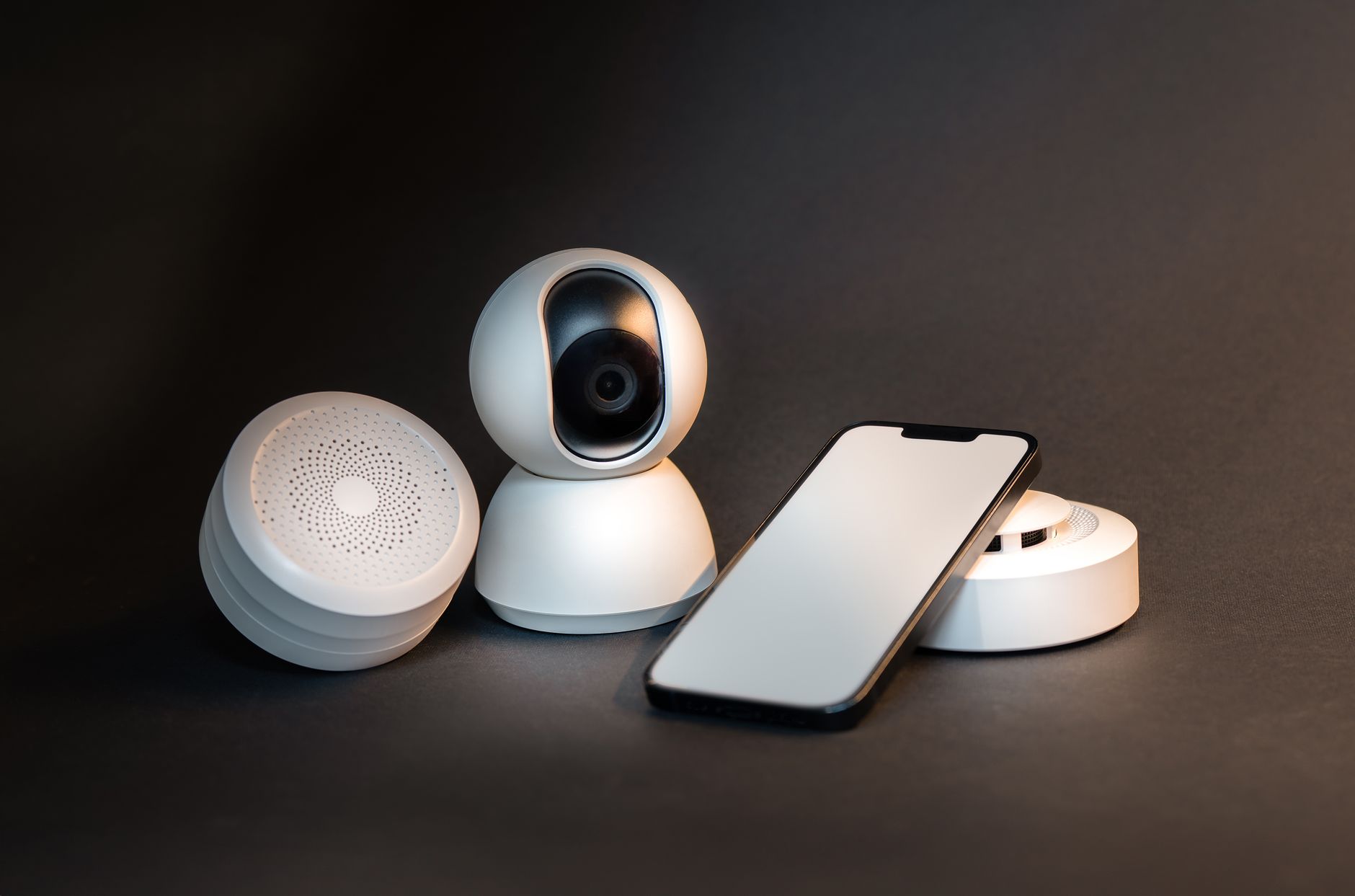
The Internet of Things, almost always shortened to IoT, is the network of physical objects embedded with sensors, software, and connectivity that allows them to collect and exchange data over the internet. Your smart thermostat adjusting the temperature before you get home, a hospital monitoring a patient's heart rate wirelessly, or a farmer tracking soil moisture from a phone: all of these are IoT in action. The concept sounds futuristic, but it has already become part of everyday life for millions of Australians.
What actually makes something part of the IoT?
Three components need to be present for a device to qualify as an IoT device. First, it needs a physical presence: a sensor, a camera, a motor, a thermometer, or any other hardware that can interact with the real world. Second, it needs connectivity: the ability to send and receive data, usually over Wi-Fi, Bluetooth, cellular networks, or specialised low-power protocols such as Zigbee or LoRaWAN. Third, it needs a processing layer: either onboard computing that interprets the data locally, or a link to cloud servers that do the heavy lifting remotely.
When these three elements work together, an ordinary object becomes a "smart" one. A regular light bulb is just a light bulb. Add a microchip, a wireless radio, and a connection to an app, and it becomes a device you can dim, schedule, or switch off from across the country.
How data flows through an IoT system
The journey of data through an IoT system follows a fairly consistent path. It begins at the device itself, where a sensor picks up something from the physical environment: temperature, movement, sound, pressure, location, or a hundred other variables. That raw reading is converted into a digital signal and transmitted to a gateway or directly to the cloud.
A gateway is essentially a translator. Many IoT devices use short-range radio protocols that can't connect directly to the internet, so the gateway bridges that gap, bundling up the data and forwarding it. Once the data reaches a cloud platform, analytics software processes it, looks for patterns, and either stores the result or triggers an automated action. That action might be sending you a notification, adjusting a machine's speed, or flagging an anomaly for a human to review.
The whole cycle can happen in milliseconds. In time-sensitive settings such as autonomous vehicles or industrial safety systems, even that can be too slow. This is why "edge computing" has become increasingly important in IoT: processing some data on or near the device itself, rather than sending everything to a distant server, cuts the delay dramatically.
Where IoT is already being used
The applications span almost every sector of modern life. In homes, smart speakers, security cameras, robot vacuums, and connected appliances have become mainstream consumer products. In healthcare, wearable monitors track chronic conditions in real time and alert clinicians to dangerous changes without requiring a hospital visit. In agriculture, moisture sensors and drone-gathered imagery help farmers apply water and fertiliser precisely where needed, reducing waste and improving yields.
Manufacturing has been transformed by what is often called the Industrial Internet of Things (IIoT). Factories use connected sensors on machinery to predict when equipment is likely to fail before it actually does, a practice known as predictive maintenance. This approach can cut unplanned downtime significantly, saving companies enormous costs. Cities are using IoT-connected traffic lights, parking sensors, and waste bins to run more efficiently. Australia's major urban centres, including Sydney, Melbourne, and Brisbane, have been piloting smart city projects that rely on IoT infrastructure.
Security: the biggest challenge facing IoT
The same connectivity that makes IoT devices useful also makes them vulnerable. Every connected device is a potential entry point for attackers. Unlike a laptop or smartphone, many IoT devices have limited processing power and were not designed with robust security in mind. Default passwords are often left unchanged, firmware updates are rarely applied, and some devices lack the ability to be patched at all.
Large-scale attacks have demonstrated just how serious this problem is. Botnets made up of compromised IoT devices have been used to knock major websites offline. In home settings, insecure smart cameras have been accessed by strangers. Understanding what cybersecurity actually involves becomes essential for anyone adding connected devices to their home or workplace network.
Regulators around the world have started responding. Australia's government has been developing voluntary codes of practice for IoT security, and the push for mandatory baseline standards, such as requiring unique default passwords and guaranteed software update periods, is gaining momentum. Buying from reputable manufacturers and keeping firmware updated are the two most important steps any consumer can take right now.
How IoT connects to other emerging technologies
IoT doesn't sit in isolation. It is deeply intertwined with several other technology trends reshaping the world. Artificial intelligence gives IoT its analytical muscle: the raw data collected by sensors is only useful when something intelligent can interpret it and act on it. Understanding how artificial intelligence works helps explain why IoT systems can learn your heating preferences, detect unusual behaviour on a production line, or flag a medical reading that looks out of the ordinary.
Blockchain technology is also being explored as a way to secure IoT data and create tamper-proof records of what devices have reported, which is particularly valuable in supply chain monitoring and regulated industries. The rollout of 5G networks is another accelerant: faster, lower-latency mobile connectivity means more devices can operate reliably in locations where Wi-Fi is impractical, from remote mine sites to city bus stops.
What IoT means for everyday Australians
For most people, IoT is less about grand technological visions and more about small, practical conveniences that accumulate over time: a water leak sensor that pings your phone before the damage spreads, a fitness tracker that nudges you to move, an electricity meter that helps you understand and reduce your bill. As devices become cheaper and more capable, the network will only grow.
The important thing to understand is that these conveniences come with trade-offs. Connected devices collect data about your habits, your health, your home, and your routines. Who holds that data, how it is stored, and what it might be used for are questions worth asking before plugging something new into your network. IoT is a genuinely powerful set of technologies. Like most powerful tools, how well it serves you depends largely on how thoughtfully you engage with it.