
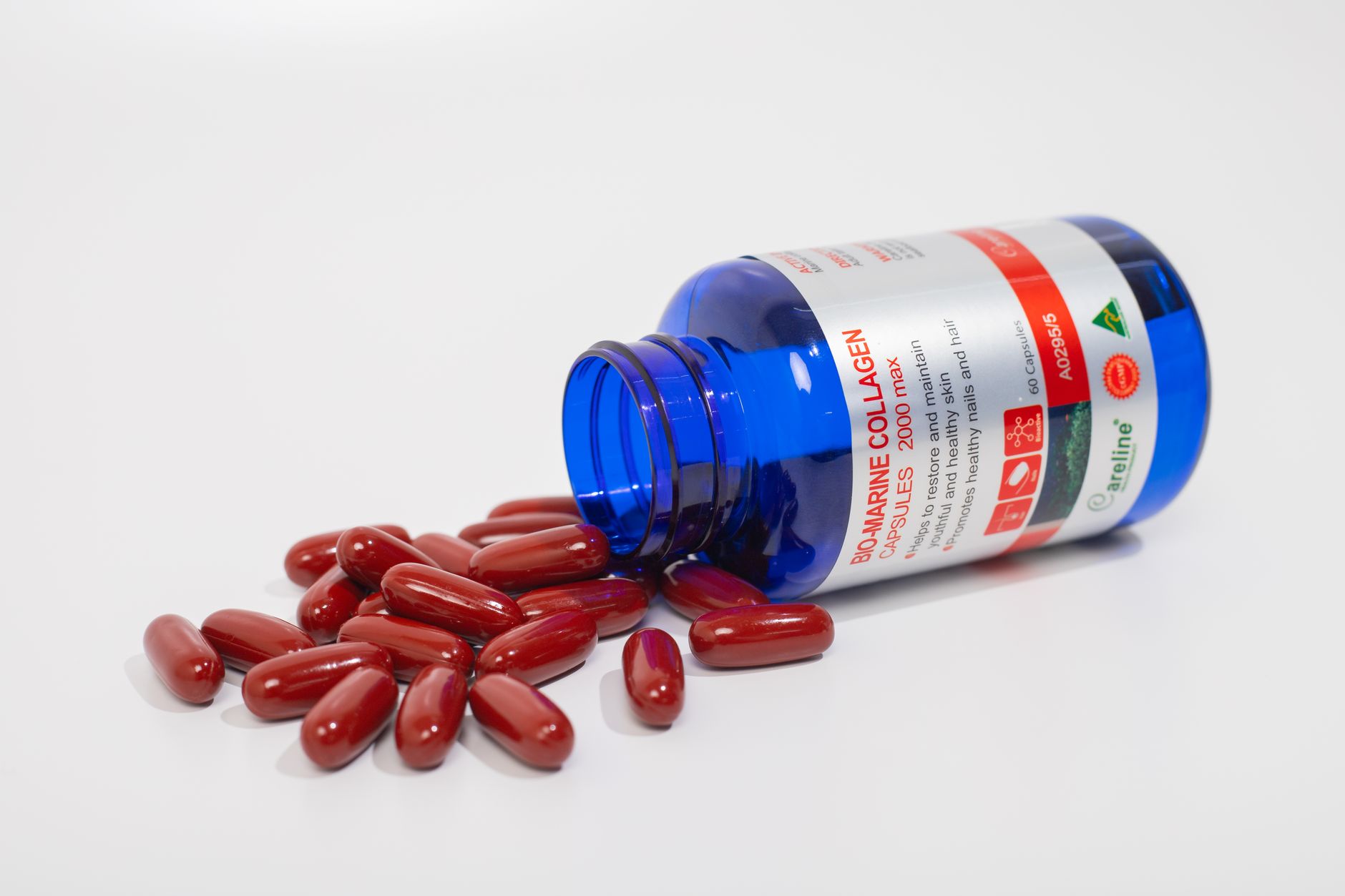
Collagen is the most abundant protein in the human body. It forms the structural scaffolding of your skin, bones, tendons, ligaments, and cartilage. Without it, your tissues would simply fall apart. Yet despite collagen being something your body already produces, the supplement industry has built a multi-billion dollar market around convincing Australians they need more of it. The reality is more nuanced than the marketing suggests.
What collagen actually is
Collagen is a fibrous protein made up of amino acids, primarily glycine, proline, and hydroxyproline. Your body assembles these amino acids into long, tightly wound triple-helix chains that give connective tissue its tensile strength. There are at least 28 known types of collagen, but Types I, II, and III account for the vast majority in the human body.
Type I collagen is found in skin, bones, and tendons. It's the most common. Type II sits mostly in cartilage, which is why you'll see it marketed toward joint health. Type III appears alongside Type I in skin and blood vessels. The type matters because different collagen supplements target different structures, and not all products are transparent about which type they contain.
Your body builds collagen continuously, using vitamin C as a critical co-factor in the process. Without adequate vitamin C, collagen synthesis breaks down. This is literally what causes scurvy. Zinc and copper also play supporting roles in the synthesis pathway.
What happens to collagen production as you age
From your mid-20s, collagen production declines at roughly 1 per cent per year. By the time most Australians reach their 40s, the cumulative effect becomes visible: skin loses elasticity, joints creak, and recovery from physical stress takes longer. Sun exposure, smoking, and high sugar intake all accelerate collagen degradation. UV radiation, in particular, breaks down collagen fibres directly and suppresses production. This is why consistent sunscreen use is one of the most practical things you can do to preserve existing collagen in your skin.
The decline is natural and inevitable to some degree. The question worth asking is whether taking collagen supplements actually reverses or slows it.
Do collagen supplements work?
This is where the evidence gets genuinely interesting, and more honest than you might expect from a supplement category.
Collagen supplements are typically sold as hydrolysed collagen (also called collagen peptides), which means the protein has been broken down into smaller fragments. When you swallow them, your digestive system breaks them down further into individual amino acids, just as it does with any other protein. Those amino acids then enter the bloodstream and get used wherever the body needs them. There is no mechanism by which a collagen peptide you swallow travels directly to your skin or knee joint.
That said, some clinical trials have found modest benefits. A 2019 review published in the Journal of Drugs in Dermatology found that oral collagen supplements improved skin elasticity and hydration in several randomised controlled trials. A separate body of research on Type II collagen and joint pain in osteoarthritis patients has shown mixed but occasionally promising results. The effects are real in some studies. They're also often small, and many trials are industry-funded.
The honest summary: collagen supplements aren't useless, but they're not magic either. If your diet already delivers adequate protein and vitamin C, the incremental benefit is likely minor.
Where you actually get collagen from food
Your body doesn't require dietary collagen. It requires the amino acids to build its own. Animal-based foods provide these most directly: bone broth, chicken skin, fish skin, and cuts of meat with connective tissue (think slow-cooked beef shin or pork belly) all supply glycine and proline in useful amounts. Eggs and dairy contribute too, though more modestly.
If you eat a varied diet with enough total protein and sufficient vitamin C from fruits and vegetables, your collagen synthesis machinery is already well-stocked with raw materials. The case for supplementation is strongest in people who are protein-deficient, have poor gut absorption, or follow a strict vegan diet that may limit glycine-rich foods.
Choosing a collagen supplement if you do want one
If you decide to try collagen, a few things are worth checking on the label. Look for hydrolysed collagen or collagen peptides, not gelatin, which is harder to absorb. A dose of 2.5 to 10 grams per day is the range used in most clinical trials showing positive results. Products that specify collagen type (I, II, or III) give you more information about what you're buying.
Marine collagen, derived from fish skin, is popular in Australia and absorbs well. Bovine collagen, from cattle hides, is cheaper and widely available. There's no strong evidence one is dramatically superior for skin outcomes. Both deliver Type I collagen peptides.
Vitamin C taken alongside collagen supplements is a sensible combination. Without it, the amino acids can't be effectively assembled into new collagen fibres. Some products include vitamin C in the formulation. Others don't, and adding it separately makes practical sense. Chronic inflammation also degrades collagen faster than normal, so addressing that through diet and lifestyle has a compounding effect on any supplementation strategy.
The bottom line
Collagen is a genuinely important protein that your body makes less of as you age. The supplement evidence is real but modest, and the marketing dramatically overstates what capsules and powders can deliver. Protecting the collagen you already have, through sunscreen, adequate sleep, limited sugar, and not smoking, is more reliably effective than anything you'll find in a jar. Supplements aren't harmful for most people. They're just not the shortcut the packaging implies.