
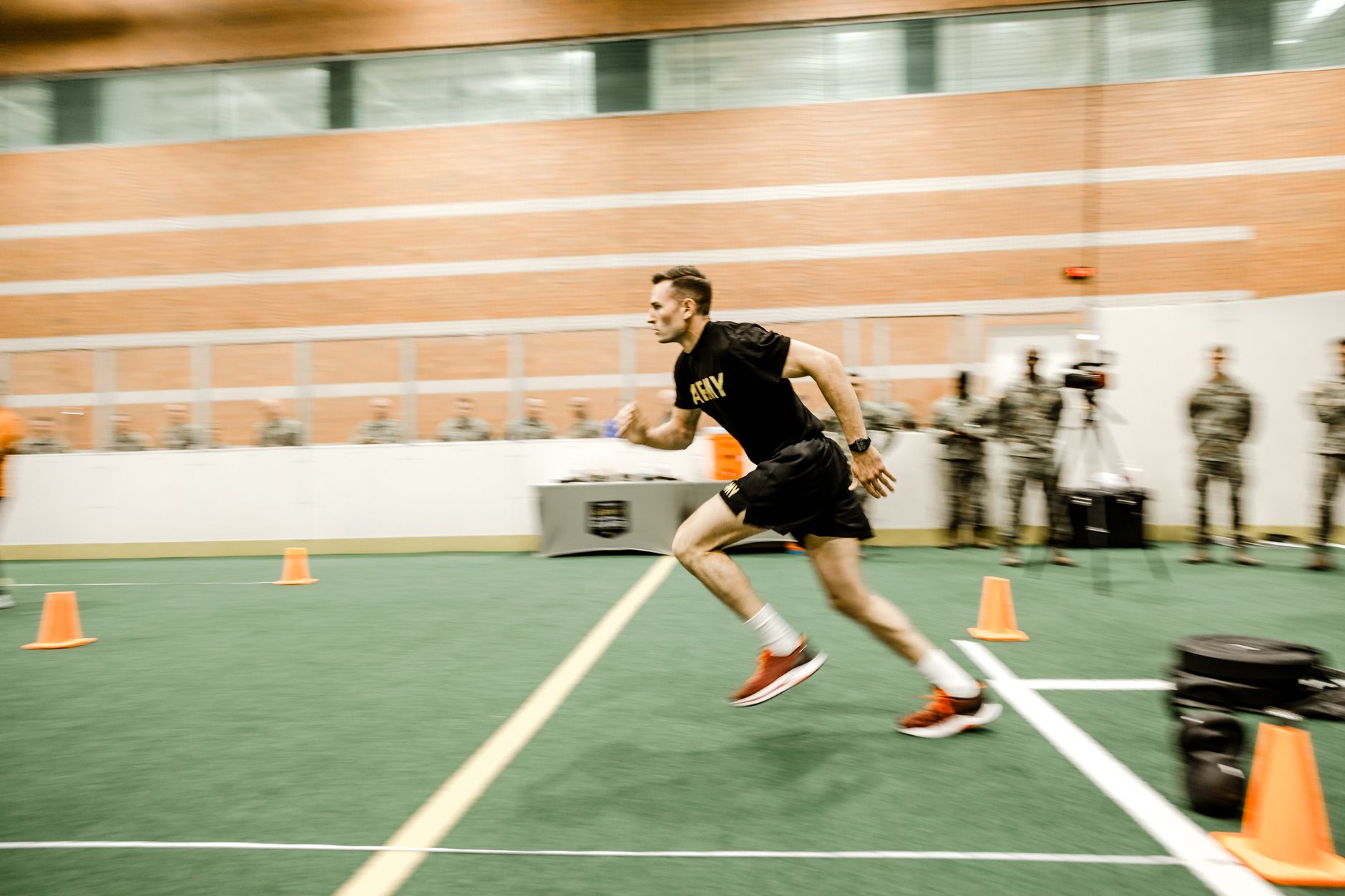
The AFL draft combine is the most intensive screening process in Australian rules football. Each year, hundreds of top-age prospects travel to Marvel Stadium in Melbourne to be weighed, measured, timed, and tested across a battery of physical and athletic assessments, all while recruiters from all 18 clubs watch closely from the sideline. A strong combine can push a fringe prospect into the first round. A poor one can drop a highly rated player several picks. The stakes are real, and the pressure is unlike anything most 17 and 18-year-olds have experienced before.
What actually happens at the combine?
The combine runs across several days in October, typically two to three weeks before the AFL draft itself. Players attend by invitation only. State leagues, academies, and the AFL's own national talent pathway each nominate prospects. Around 100 to 150 players receive an invitation in a typical year, drawn from the top tier of the under-18 cohort. Not everyone invited is guaranteed to be drafted, and some who skip the combine altogether still get picked up. But attending sends a signal, and performing well sends a louder one.
The physical testing includes a 20-metre sprint, a 6-minute run test (known as the Yo-Yo or beep test variant), vertical jump, standing broad jump, agility run, and a kicking assessment. Clubs also record height, weight, and arm length, measurements that inform position profiles and long-term development projections. A midfielder built like a small forward won't necessarily fall, but clubs use body data to model where a player fits in a list structure.
The tests that matter most to recruiters
Not every test carries equal weight. The sprint and agility results get the most attention, particularly for players competing for top-10 picks. A sub-2.8-second 20-metre sprint time is considered elite. Players who clock above 3.1 seconds often face follow-up questions from clubs about their role and how they generate separation from opponents.
The endurance test matters too, but differently. A high beep test score won't make a player a first-round pick on its own. It's more of a floor test: clubs want assurance that a prospect can sustain effort across four quarters at AFL level. Players who score poorly on endurance but have elite explosiveness sometimes still get drafted early, with the understanding that fitness is more coachable than raw speed.
The kicking assessment is newer in its sophistication. Clubs now track foot speed, ball drop consistency, and kick efficiency under mild pressure rather than just raw distance. A player who kicks 65 metres on an oval but shanks under scrutiny raises questions. One who kicks 55 metres with textbook mechanics often earns more confidence from selectors.
Interviews and psychological profiling
Physical testing is only part of it. Each player also sits through formal interviews with club recruiting staff. Some clubs conduct these in a structured panel format. Others run them informally over coffee. The content covers football intelligence, personal background, resilience, and how prospects talk about their own game.
Psychological assessments are used by most clubs, though the specific tools vary. Some organisations use standardised personality inventories. Others have developed proprietary questionnaires built around their own cultural values. Players are rarely told exactly what's being measured, which is itself part of the design. Clubs are trying to understand decision-making patterns, emotional regulation, and how a young person handles uncertainty.
This is where the combine diverges most sharply from pure athleticism. Two players with identical sprint times can have completely different draft rankings based on how they present in a room.
Why some players skip it
Players can withdraw from the combine for a few reasons. Injury is the most common. A pulled hamstring two weeks out from the combine creates a genuine dilemma: attend and risk an underwhelming time, or withdraw and trust that clubs have enough game tape to feel confident. Most managers advise caution and withdrawal when the injury is genuine, provided the player communicates clearly with interested clubs.
Occasionally a player is so highly rated that attending offers little upside. If a prospect is consensus number one or two, the combine adds risk without reward. Patrick Corry and others before him made similar calls in past years. Clubs expected at the top of the draft already had those players at the top of their boards regardless.
The combine also doesn't include match simulation or live football. That's deliberate. The AFL treats it as a supplement to game tape, not a replacement. Recruiters spend far more time watching state championship matches than they do studying split times. The combine adds a standardised data layer. It doesn't override the eye test.
How combine results feed into draft night
On draft night, clubs make selections in a set order, and combine data sits in front of every recruiting manager at the table. A player who tested poorly might still get selected if clubs weighted their game film heavily. A player who tested brilliantly might slip if their football IQ raised flags in interviews. The combine is one input among a dozen, but it's the most publicly visible and the most cited by commentators on draft night television coverage.
Understanding the combine makes the draft itself easier to follow. When a club passes on a prospect widely tipped to go early, a combine result, or the absence of one, is often the reason that surfaces in post-draft analysis. Clubs rarely explain their selections in real time, but the data trail is there for those who know where to look.
The combine sits within a broader talent pathway. Players who come through academies, NAB League clubs, or the preseason development system arrive at the combine with varying degrees of preparation. Academy players often have professional conditioning support behind them for the six months leading up to the event. Country players sometimes arrive with raw athleticism but less polish. That gap can show up in the testing, and clubs factor it into their projection of how a player will develop at AFL level.
For the players themselves, the combine is often the first time they're treated as professionals before they're actually paid as one. They share hotel rooms, swap nerves in warm-up tunnels, and run their fastest 20 metres in front of people who could change their careers. Most will remember the exact time they ran for the rest of their lives.