
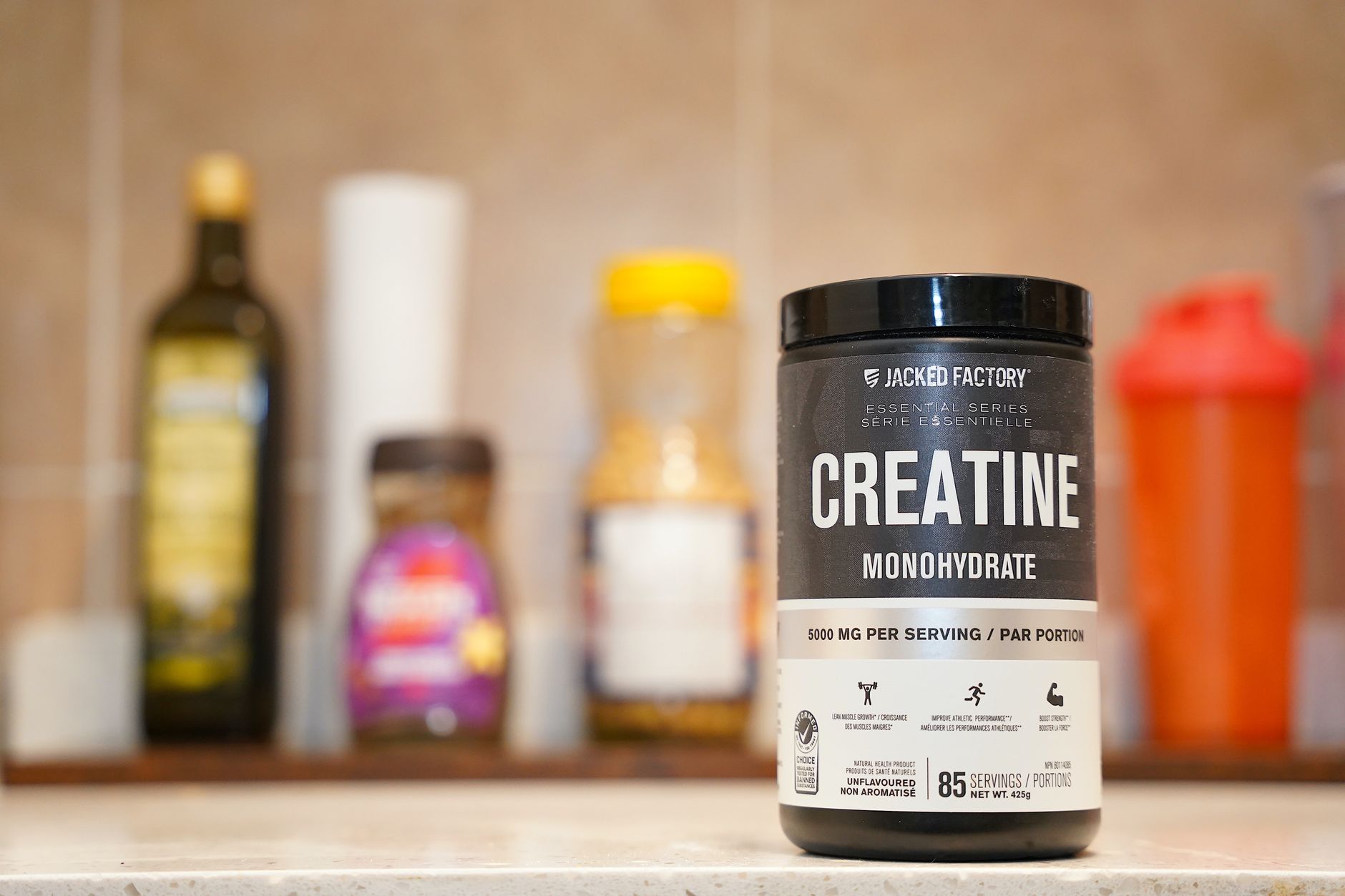
Creatine sits in almost every gym bag and supplement aisle in Australia, yet it's also one of the most misunderstood compounds in everyday health discussions. People associate it with elite athletes or bodybuilders, assume it's somehow risky, or confuse it with anabolic steroids. None of that holds up. Creatine is a naturally occurring compound your body already makes, and decades of research support its safety and effectiveness for a wide range of people.
What creatine actually is
Creatine is a molecule produced in the liver, kidneys, and pancreas from three amino acids: arginine, glycine, and methionine. Your body stores most of it in skeletal muscle, where it plays a direct role in producing adenosine triphosphate (ATP), the molecule your cells use as fuel during short, intense efforts. Think sprinting, lifting, jumping. Activities that demand a lot of energy in a very short window.
You also get creatine from food. Red meat and fish are the richest dietary sources, with roughly 1–2 grams of creatine per 500 grams of raw beef. Vegetarians and vegans naturally carry lower creatine stores in their muscles, which is relevant when thinking about who benefits most from supplementation. Most people's muscles are only about 60–80% saturated with creatine at baseline. Supplementing pushes that figure toward 100%.
How it works in the body
When you perform a high-intensity movement, your muscles burn through ATP almost instantly. Phosphocreatine, the stored form of creatine, donates a phosphate group to replenish ATP at a rate far faster than any other energy system can manage. This is why creatine supplementation translates directly into more reps, faster sprints, and more explosive output.
It doesn't make you stronger in a hormonal sense. Creatine doesn't change testosterone levels or alter muscle tissue directly. What it does is let you train harder and recover slightly faster between sets, and that additional training volume compounds over weeks and months into genuine strength and muscle gains.
There's also emerging research on creatine's role in brain function. Some studies suggest it supports cognitive performance under sleep deprivation and may have modest benefits for memory and processing speed, particularly in populations with low dietary intake. The evidence here is interesting but still developing, and it's worth being careful not to overstate it.
What the research actually says
Creatine monohydrate is the most studied form of the supplement, with well over 500 peer-reviewed studies examining its effects. The International Society of Sports Nutrition classifies creatine monohydrate as safe, effective, and ethical for use by athletes and healthy adults. It's not a banned substance in Australian sport.
Consistent findings across trials show creatine supplementation improves performance in repeated bouts of high-intensity exercise, increases lean muscle mass over time, and reduces recovery time between sessions. Average strength gains in resistance training programs run approximately 5–15% higher in creatine users compared to placebo groups over 4–12 weeks, though individual responses vary.
One thing worth understanding: creatine causes water retention inside the muscle cells themselves. This is not the same as bloating. It means the muscle holds more fluid, which is part of why the scales often go up by 1–2 kilograms in the first week. That weight is in your muscles, not under your skin, and it's not fat.
Who benefits most from taking it
Creatine delivers the clearest benefits to people doing resistance training, high-intensity interval work, or any sport requiring repeated explosive efforts. Gym-goers, footballers, sprinters, and swimmers all fall into this category. It's less useful for endurance athletes whose sport relies on aerobic pathways rather than short bursts of phosphocreatine-fuelled energy.
Older adults are a population often overlooked in supplement discussions. Creatine has shown genuine promise for preserving muscle mass and reducing the rate of age-related strength decline, a condition called sarcopenia. If you're over 50 and doing resistance training, creatine is worth considering.
Vegetarians and vegans also tend to see a larger response to supplementation because their dietary creatine intake starts at near zero. The effect is more pronounced when the baseline is low.
If understanding how your body uses nutrients generally connects to your training goals, the broader picture of how much protein you actually need is closely related to how well creatine can work alongside your diet.
Safety and common concerns
The most persistent myth about creatine is that it damages the kidneys. This claim traces back to a small number of case reports from the 1990s and hasn't held up to systematic study. In healthy individuals, creatine supplementation at standard doses does not impair kidney function. People with pre-existing kidney disease should consult a doctor before starting, as they would with any supplement.
Hair loss is another claim that circulates online. One study found creatine supplementation raised levels of dihydrotestosterone (DHT), a hormone associated with male pattern baldness. The study was small, never replicated at scale, and didn't measure actual hair loss. The link remains speculative.
Stomach discomfort can occur if large doses are taken at once. Taking creatine with food or splitting doses across the day resolves this for most people.
How to actually take it
Creatine monohydrate powder is the cheapest, most researched, and most effective form available. Don't pay extra for creatine HCl, buffered creatine, or other branded variants. The evidence doesn't justify the price difference.
Standard dosing is 3–5 grams per day. That's it. Some protocols suggest a loading phase of 20 grams per day for 5–7 days to saturate muscles faster, but it isn't necessary. Loading just gets you to full saturation in a week rather than a month. Both approaches reach the same endpoint.
Timing doesn't matter much. Post-workout is marginally better than pre-workout in some studies, but the difference is small enough to ignore. Take it when it's convenient and you'll actually remember to do it. Consistency across weeks matters far more than the specific window around your session.
Recovery is an area where creatine's benefits overlap with other pillars of health. Sleep quality, hydration, and stress management all shape how well your body uses supplementation. If you've been reading about how dehydration affects your body, it's worth knowing that adequate fluid intake also supports creatine uptake into muscle tissue.
Is it worth it?
Creatine monohydrate is inexpensive, safe for most healthy adults, and backed by more research than almost any other supplement on the market. A month's supply typically costs less than $30. For people doing regular resistance training or high-intensity sport, the performance and recovery benefits are real and well-established.
It's not a shortcut and it's not magic. Creatine works because it lets you train slightly harder, and slightly harder training over months adds up to meaningful progress. That's the whole story.